
How to Find the Best Steel Coil Supplier in China?
China’s steel market offers scale, but scale alone does not guarantee a dependable order. The World Steel Association’s World Steel in Figures 2024 reports that China produced 1,019.1 million tonnes of crude steel in 2023, out of 1,892.2 million tonnes worldwide. These figures describe crude steel, not finished coil supply. That distinction matters when comparing a Steel Coil Supplier’s capacity, product range, and delivery record.
A sound evaluation starts with the specification. Confirm steel grade, coil thickness, width, coating, weight, and permitted tolerances before requesting quotations. Ask for mill test certificates and verify that the stated values match the contract and shipment documents. Look closely at coil edges, surface condition, and packaging requirements; a small mismatch can create rework on the production line. Request recent references for comparable orders, not broad claims about “global service.” Specific proof is more useful.
Price matters. So does consistency. Compare quotations on the same technical and shipping basis, including lead time, inspection arrangements, and how quality concerns are handled. Supplier audits, sample checks, and clear written acceptance criteria can reduce uncertainty, though none removes it entirely. Buyers should also distinguish a trading company from a mill or service center and understand who controls each production step. This guide explains how to compare suppliers in China using practical evidence, rather than sales language alone. Even careful checks can miss problems; acknowledging that is part of making a reliable sourcing decision.
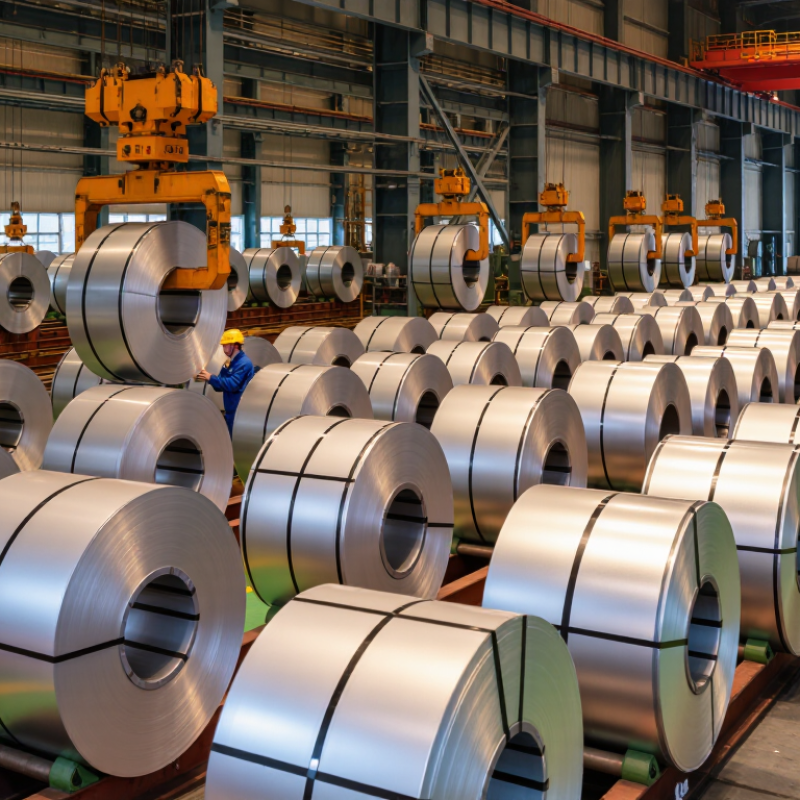
Define Your Steel Coil Requirements and Application
Before comparing steel coil suppliers in China, define what the coil must do in your process.
A coil for roll-forming roof panels may need a different grade, coating, and surface finish from one used for stamped appliance parts. Specify the steel grade, thickness, width, dimensional tolerances, coating type, and required surface condition. Include the coil’s inner diameter, outer diameter, and maximum weight if your line has handling limits. Small details matter.
Describe the application and the conditions the steel will face. Will it be bent sharply, welded, painted, or exposed to moisture? Share the forming method and any critical performance requirements, such as strength or corrosion resistance. In practical sourcing, unclear requirements often lead to avoidable sample delays. A concise specification sheet helps suppliers assess whether they can meet your needs and quote on comparable terms. That detail matters. Ask for relevant inspection records and confirm how dimensions and coating are checked before shipment. If a tolerance is flexible, say so; if it is critical, mark it clearly. I would not assume that a familiar grade name guarantees identical performance across every production route. That assumption deserves a second look.
Identify and Shortlist Potential Suppliers in China
Finding a reliable steel coil supplier in China begins with a clear purchasing brief. Define the steel grade, coil width, thickness tolerance, surface finish, weight range, and required monthly volume. Include packaging details and the destination port. Vague requests attract vague quotations.
Search through industrial directories, trade exhibitions, sourcing agents, and regional manufacturing clusters. Shortlist suppliers with verifiable production facilities, recent export experience, and stable communication. Request business registration details, factory photographs, equipment lists, and production capacity records. A polished website is not proof. Factory evidence matters more.
Ask each candidate for recent mill certificates, inspection reports, and sample coils matching your specifications. Check whether chemical composition, yield strength, tensile strength, and coating weight meet your requirements. Compare quotation terms carefully, including payment schedules, delivery time, tolerances, and Incoterms. Independent inspection before shipment can reveal edge damage, rust, poor labeling, or incorrect coil weight. Small details become expensive later.
Do not choose only by price. The cheapest offer may hide inconsistent quality or weak after-sales support. Speak with two or three previous customers when possible. Keep every specification in writing. Suppliers may agree quickly, yet misunderstand a technical detail. That risk deserves attention. A trial order is often wiser than a large first shipment, although it may increase the initial cost. Reassess the shortlist after receiving samples, checking documents, and measuring actual performance.
Verify Supplier Credentials, Production Capacity, and Quality Controls
How to Find the Best Steel Coil Supplier in China?
Verify Supplier Credentials, Production Capacity, and Quality Controls
A reliable supplier should make its credentials easy to check. Request business registration details, relevant quality certifications, and recent mill test certificates. Match each certificate to the issuing body, product grade, thickness, and heat number. A document that looks complete can still describe a different coil. Check carefully.
Capacity needs evidence, not promises. Ask for production schedules, equipment specifications, monthly output records, and recent shipment references. The World Steel Association’s World Steel in Figures 2024 reports global crude steel production of 1,888.2 million tonnes in 2023. That scale shows why headline industry output cannot confirm one supplier’s available capacity. Request a factory visit or live video walkthrough, and compare stated output with visible lines, inventory, and order lead times. Small inconsistencies deserve follow-up.
Tips: Ask for coil samples and independent checks of thickness, width, surface finish, and mechanical properties. Review how the supplier tracks defects and handles corrective actions. A polished audit file is useful, but it is not the same as consistent production. If records are incomplete, pause and ask why.
How to Find the Best Steel Coil Supplier in China
Verify supplier credentials, production capacity, and quality controls using documented evidence.
How to use this chart: The bars count evidence items to check in each area; they are not supplier scores or market statistics.
- Credentials (3): business registration, relevant certifications and their validity, export documentation.
- Production capacity (3): equipment and product capability, documented output, production schedule and lead time.
- Quality controls (4): incoming material inspection, in-process checks, final inspection records, testing equipment calibration.
Compare Pricing, Specifications, Lead Times, and Shipping Options
China produced 1,019.1 million tonnes of crude steel in 2023, roughly 54% of world output, according to the World Steel Association’s World Steel in Figures 2024. That scale offers buyers options, not automatic quality. Compare like-for-like specifications: grade, standard, thickness tolerance, width, coating mass, surface finish, and coil weight. Ask for an itemized quote covering slitting, protective wrapping, inland haulage, port fees, and insurance. A low mill price can rise quickly after handling. Small details matter.
Separate lead time into production, inspection, and dispatch dates; “30 days” may cover production alone. Confirm the destination port, shipping method, packing dimensions, and who arranges freight. UNCTAD’s Review of Maritime Transport 2024 reported that global containerized trade contracted by 0.3% in 2023, while forecasting growth of 3.5% in 2024. Such shifts make dated freight quotes more useful than general promises. Request a sample test certificate and coil photographs before shipment. Even a careful comparison can miss charges, so keep a written list of assumptions and ask suppliers to confirm them.
Evaluate Communication and Select the Best-Fit Supplier
When comparing steel coil suppliers in China, pay attention to how they handle technical questions, not just how quickly they reply. Ask for confirmation of grade, thickness tolerance, coil width, coating, and packaging requirements. A clear supplier will explain what they can meet and flag limits before quoting. Request a sample certificate or a recent inspection record, with sensitive commercial details removed if needed. Small details matter. If replies stay vague or specifications change between messages, pause and ask for written clarification.
Communication should also fit your team’s working style. Share a concise purchase brief with target quantities, delivery window, destination, and required documents. Then compare each supplier’s response against the same checklist. A short video call can reveal whether the contact understands production steps or is simply forwarding messages. Ask who will manage updates after the order is placed, and how delays or specification changes will be reported. Keep decisions and revisions in email or another traceable channel. One missed reply is not proof of poor service; time zones and workload can affect response times. Trust takes time. A supplier may be technically capable yet unsuitable if its minimum order quantity, lead time, or update process does not match your operation.


