
2026 Top 10G BiDi SFP Types for Global Buyers?
Global demand for compact 10G optical links is changing as enterprises expand fiber access, data centers, and metro networks. The Cisco Annual Internet Report documented sustained growth in global IP traffic, while LightCounting’s Ethernet Optics market research continues to track strong demand for higher-speed transceivers. These trends make the 10g Bidi Sfp relevant for buyers seeking capacity without installing a second fiber.
A BiDi module sends and receives data through different wavelengths on one strand. Common configurations include 1270/1330 nm and 1270/1310 nm pairs. Reach options often range from 10 km to 80 km, depending on the optical budget, connector design, and network conditions. Omdia’s optical networking research also highlights the importance of interoperability, deployment flexibility, and supply-chain reliability. Those factors matter more than a low purchase price.
This guide examines the top 10G BiDi SFP types considered by global buyers in 2026. It compares wavelength pairs, transmission distance, DOM support, temperature ratings, coding options, and equipment compatibility. Real installations can be less tidy than product sheets suggest. A 40 km label may not solve a route with dirty connectors, aging splices, or excessive loss. That assumption can fail.
Buyers should verify the switch vendor, fiber type, optical power range, and matching A/B module pair before ordering. Independent testing, traceable specifications, and clear warranty terms strengthen procurement decisions. The best choice is not always the longest-reach optic. It is the module that fits the actual link budget, operating environment, and maintenance plan.
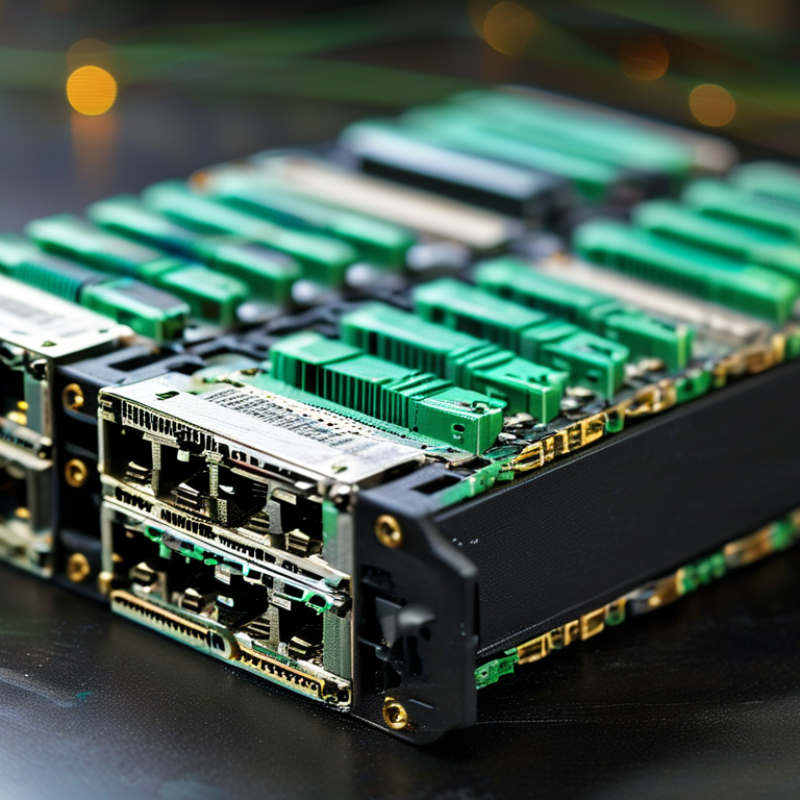
What 10G BiDi SFP Modules Are and How They Differ from Duplex SFPs
10G BiDi SFP modules use one optical fiber for both transmission and reception. Their WDM design separates signals through different wavelengths. Common 2026 options include 1270/1330nm, 1330/1270nm, 1310/1550nm, and 1550/1310nm pairs. Typical reach ranges from 10km to 80km, depending on fiber quality and optical power.
Duplex SFP+ modules use two fibers and usually separate transmit and receive ports. BiDi modules use one LC port, saving fiber capacity in crowded distribution frames. However, BiDi units must operate as matched wavelength pairs.
A 1270nm transmitter cannot work correctly with another 1270nm transmitter. This detail causes avoidable purchasing errors. Field installation experience also shows that connector cleanliness and link-budget checks matter more than impressive distance labels.
The International Telecommunication Union reported 5.4 billion internet users in 2023, increasing pressure on metro and enterprise networks. Cisco’s Annual Internet Report estimated 29.3 billion connected devices by 2023. These figures support continued demand for compact 10G optical links, but they do not prove every BiDi design is better. Buyers should verify single-mode fiber, reach, temperature rating, digital diagnostics, and equipment compatibility. A 10km module may be economical for a campus link, while a 40km version can be wasteful. Pricing tables often hide this difference. Even experienced buyers should recheck wavelength pairing before ordering.
The Main 10G BiDi SFP Types by Wavelength Pair and Transmission Reach
2026 Top 10G BiDi SFP Types for Global Buyers
The main 10G BiDi SFP types differ by wavelength pair and transmission reach. A BiDi module sends and receives data over one fiber. Its wavelength pair must match the remote module.
For short metropolitan links, 1270/1330 nm and 1330/1270 nm versions commonly support 10 kilometers. Some versions extend to 20 kilometers. The 1490/1310 nm pair is also used for approximately 20 kilometers, depending on fiber quality and optical budgets. For longer routes, 1270/1570 nm modules often serve 20 to 40 kilometers. Certain 1490/1550 nm designs reach farther, but they demand stricter loss calculations. Wavelength direction matters.
The 2023 Annual Internet Report estimated 5.3 billion internet users and 29.3 billion connected devices by 2023. That scale keeps fiber upgrades active in access networks and data centers. A 2024 Optical Transceiver Market Report also identified 10G modules as a mature, high-volume segment, rather than a declining niche. Buyers should compare transmit power, receiver sensitivity, dispersion tolerance, and connector cleanliness. Reach labels can mislead. A 40-kilometer rating may fail across aged fiber, multiple splices, or high-loss panels. That assumption needs testing. Field experience shows that matched wavelength pairs and measured insertion loss matter more than nominal distance alone.
Key Standards, Fiber Requirements, and Device Compatibility Factors
2026 Top 10G BiDi SFP Types for Global Buyers
For 10G BiDi networks, the main types use paired transmit and receive wavelengths. Common options include 1270/1330 nm, 1330/1270 nm, and 1310/1550 nm combinations. Each module must match its opposite wavelength partner. They are not interchangeable. Most support 10GBASE-BX operation under IEEE 802.3ae guidance, while SFF-8472 and MSA practices help define monitoring and mechanical compatibility.
Fiber requirements deserve close attention. These modules normally require single-mode fiber, preferably OS2, with a simplex LC connection. Check the planned distance before ordering. Short-reach versions may cover 10 km, while extended versions can support 20, 40, or 80 km under suitable link conditions. Connector loss, splice quality, and optical power budgets still matter. A long-rated module cannot repair poor installation work.
Device compatibility involves more than speed. Confirm the switch or router accepts the intended SFP+ form factor, wavelength pair, temperature range, and digital diagnostics. Some systems verify module coding, while others report warnings or disable unsupported optics. Firmware behavior can change after upgrades. This is easy to overlook. I recommend testing one module pair in the actual device before purchasing at scale. Even published specifications may leave practical questions about alarms, DOM readings, and interoperability between different suppliers.
| Rank | 10g Bidi Sfp+ Type | Typical Tx / Rx Wavelength | Typical Maximum Reach | Fiber Requirement | Connector and Optical Interface | Standards Context | Key Compatibility Factors | Typical Deployment |
|---|---|---|---|---|---|---|---|---|
| 1 | 10G-BX10-U | 1270 nm Tx / 1330 nm Rx | Up to 10 km | Single-mode fiber G.652.D recommended; G.657.A1 is generally compatible | Simplex LC; one optical fiber; SFP+ form factor | 10GbE commonly associated with IEEE 802.3ae; BiDi wavelength pairing is defined by the optical module specification or MSA | Must be paired with the complementary 1330 nm Tx / 1270 nm Rx unit; verify host port supports 10GbE SFP+ and the required coding | Short metropolitan links, access networks, data-center interconnection |
| 2 | 10G-BX10-D | 1330 nm Tx / 1270 nm Rx | Up to 10 km | Single-mode fiber G.652.D recommended; G.657.A1 is generally compatible | Simplex LC; one optical fiber; SFP+ form factor | 10GbE electrical and Ethernet operation typically follow IEEE 802.3ae; wavelength direction is complementary to BX10-U | Use only with the matching opposite-direction wavelength; check DOM support, transmit-power limits, and receiver sensitivity | Point-to-point access and campus links where a second fiber is unavailable |
| 3 | 10G-BX20-U | 1270 nm Tx / 1330 nm Rx | Up to 20 km | Single-mode fiber G.652.D preferred; chromatic-dispersion performance should be confirmed | Simplex LC; one fiber; SFP+ optical interface | Usually marketed as 10GBASE-BX or 10G BiDi; IEEE 802.3ae defines 10GbE operation, not a universal BiDi wavelength table | Confirm optical budget, launch power, receiver overload, and interoperability with the remote 1330 nm Tx / 1270 nm Rx module | Regional access aggregation and medium-distance enterprise links |
| 4 | 10G-BX20-D | 1330 nm Tx / 1270 nm Rx | Up to 20 km | Single-mode fiber G.652.D or compatible G.657.A1 fiber | Simplex LC; one fiber; SFP+ form factor | 10GbE host signaling commonly uses IEEE 802.3ae-compatible equipment; optical direction must match the remote endpoint | Check port speed, FEC behavior where applicable, module temperature range, and the complete link loss budget | Access rings, aggregation uplinks, and distributed building networks |
| 5 | 10G-BX40-U | 1270 nm Tx / 1330 nm Rx | Up to 40 km | Single-mode fiber G.652.D strongly recommended; optical loss and dispersion must be measured or calculated | Simplex LC; one fiber; extended-reach SFP+ | Typically supplied as a BiDi implementation for 10GbE; the exact optical budget is manufacturer-specific rather than universally fixed by IEEE | Validate total attenuation, connector and splice loss, chromatic dispersion, minimum bend radius, and receiver sensitivity | Longer metropolitan networks and telecom aggregation links |
| 6 | 10G-BX40-D | 1330 nm Tx / 1270 nm Rx | Up to 40 km | Single-mode fiber G.652.D preferred; G.657-compatible cable may be used when link loss is acceptable | Simplex LC; one fiber; extended-reach SFP+ | Complementary endpoint for 1270 nm Tx / 1330 nm Rx operation; host-side interoperability depends on SFP+ compliance | Confirm that both endpoints use the same reach class and optical budget; do not mix a 10 km optic with a 40 km optic without validation | Metro Ethernet, carrier access, and remote-site aggregation |
| 7 | 10G-BX60-U | 1270 nm Tx / 1330 nm Rx | Up to 60 km | Single-mode fiber G.652.D recommended; dispersion and optical power margin are critical | Simplex LC; one fiber; high-budget SFP+ | Commonly implemented as a proprietary or MSA-based 10G BiDi reach class; it is not a separate universal IEEE BiDi wavelength standard | Review laser safety classification, receiver overload, optical budget, DOM alarms, and switch acceptance of extended-reach modules | Large metro rings and long access-aggregation spans |
| 8 | 10G-BX60-D | 1330 nm Tx / 1270 nm Rx | Up to 60 km | Single-mode fiber G.652.D preferred; engineered links may require dispersion analysis | Simplex LC; one fiber; high-budget SFP+ | Complementary to BX60-U; electrical interface and management behavior should comply with the host platform requirements | Verify exact wavelength tolerance, minimum receiver power, maximum receive power, and interoperability with the remote endpoint | Carrier access, utility networks, and remote aggregation sites |
| 9 | 10G-BiDi-80-A | 1490 nm Tx / 1550 nm Rx | Up to 80 km | Single-mode fiber G.652.D preferred; fiber attenuation at 1490–1550 nm should be considered | Simplex LC; one fiber; high-reach SFP+ | Usually an MSA or vendor-defined BiDi implementation; 1490/1550 nm operation is not the same as IEEE 10GBASE-LR duplex optics | Must be paired with the 1550 nm Tx / 1490 nm Rx counterpart; verify optical budget, dispersion, and platform support for the coded module | Long-haul metropolitan and regional point-to-point links |
| 10 | 10G-BiDi-80-B | 1550 nm Tx / 1490 nm Rx | Up to 80 km | Single-mode fiber G.652.D recommended; link engineering is required for maximum-distance operation | Simplex LC; one fiber; high-reach SFP+ | Complementary endpoint for 1490 nm Tx / 1550 nm Rx BiDi operation; exact specifications vary by optical design | Check compatibility with the remote wavelength, host SFP+ port, DOM implementation, temperature grade, and optical safety requirements | Regional aggregation and long-distance enterprise or carrier links |
How to Match 10G BiDi SFP Types with Network Applications
2026 Top 10G BiDi SFP Types for Global Buyers?
How to Match 10G BiDi SFP Types with Network Applications
Choosing a 10G BiDi SFP starts with the fiber already installed. BiDi modules use one single-mode fiber for both transmission and reception. They require a matched pair with opposite wavelengths, such as 1270/1330 nm and 1330/1270 nm. Never mix the pair casually. The link may remain dark.
For office buildings and campus networks, 10 km or 20 km modules usually provide enough reach. They suit inter-building links using OS2 single-mode fiber. A 40 km or 80 km type fits metro access, utility routes, and remote aggregation sites. However, distance ratings depend on fiber loss, connectors, splices, and optical budget. The label alone is not enough.
Check the application carefully. A surveillance network may need wide temperature support and digital diagnostics. A data center may prioritize low power, short installation time, and equipment compatibility. Confirm the SFP cage, host coding, connector type, and operating temperature before purchasing. Simplex LC is common, but the installed patch panel may tell a different story.
Field tests often reveal overlooked problems. Dirty connectors can imitate a defective module. Excessive optical power can also overload a receiver. A neat spreadsheet can still mislead. I would verify wavelength direction, link budget, DOM readings, and real fiber length before approving a large order. Small compatibility details matter.
Global Buyer Checklist for Comparing 10G BiDi SFP Suppliers in 2026
Global buyers comparing 10G BiDi SFP suppliers in 2026 should check more than price. BiDi modules use different transmit and receive wavelengths, such as 1270/1330nm or 1310/1490nm. The pair must match at both ends. A mismatch can leave the link dark.
Request test data for optical power, receiver sensitivity, dispersion, and operating temperature. Confirm whether the module supports the required single-mode distance, from short campus links to 40 km routes. Check digital optical monitoring, connector type, firmware coding, and compliance with relevant industry standards. Ask for sample units before approving a large order. Real fiber testing reveals issues that product sheets may hide.
Tips: Compare warranty terms, replacement speed, traceable quality records, and technical support hours. Ask whether each batch receives temperature-cycle and interoperability testing. Supplier history matters, but evidence matters more. In deployment reviews, engineers often find that a low quote excludes testing, coding, or compatible cages. I have seen planning errors around wavelength pairs delay commissioning. That is worth admitting. Also review lead times, packaging protection, and documentation quality. A supplier that answers technical questions clearly is usually easier to trust during a fault. Yet confidence should follow verification, not replace it.
2026 Top 10G BiDi SFP Types for Global Buyers
Representative nominal reach classes and wavelength directions for comparing 10G BiDi SFP suppliers.


