
Who Are the Top Stainless Steel Pipe Manufacturers?
Choosing among the top Stainless Steel Pipe Manufacturer companies requires more than comparing prices or polished websites. Buyers should examine alloy grades, production methods, inspection records, and delivery experience. A dependable supplier can provide mill certificates, dimensional reports, heat-treatment details, and traceable batch numbers. Those documents matter when pipes enter pressure, chemical, food-processing, or architectural systems.
Metallurgist and stainless-steel specialist Harry Bhadeshia has emphasized, “The properties of steel depend on its microstructure.” That principle should guide every manufacturer comparison. A pipe may appear flawless, yet poor chemistry control or uneven welding can create problems later. Quality begins inside the metal. It does not end with surface polishing.
Leading manufacturers usually demonstrate experience through modern piercing mills, controlled welding lines, ultrasonic testing, and consistent finishing. They also explain whether their products follow ASTM, ASME, EN, or other applicable specifications. Be careful with vague claims. “Premium quality” proves very little without test results and independent verification.
A strong Stainless Steel Pipe Manufacturer should understand service conditions, not merely sell standard sizes. Ask about corrosion exposure, operating temperature, wall thickness, connection methods, and required tolerances. Some suppliers excel in large industrial projects. Others perform better with custom dimensions or smaller production runs.
The ranking is not absolute. That deserves attention. The best manufacturer for a desalination plant may not suit a food-processing facility. Lead times, technical support, regional service, and after-sales accountability can change the decision. This guide compares respected manufacturers through practical evidence, while recognizing that no supplier is perfect. Performance depends on both the factory and the application.
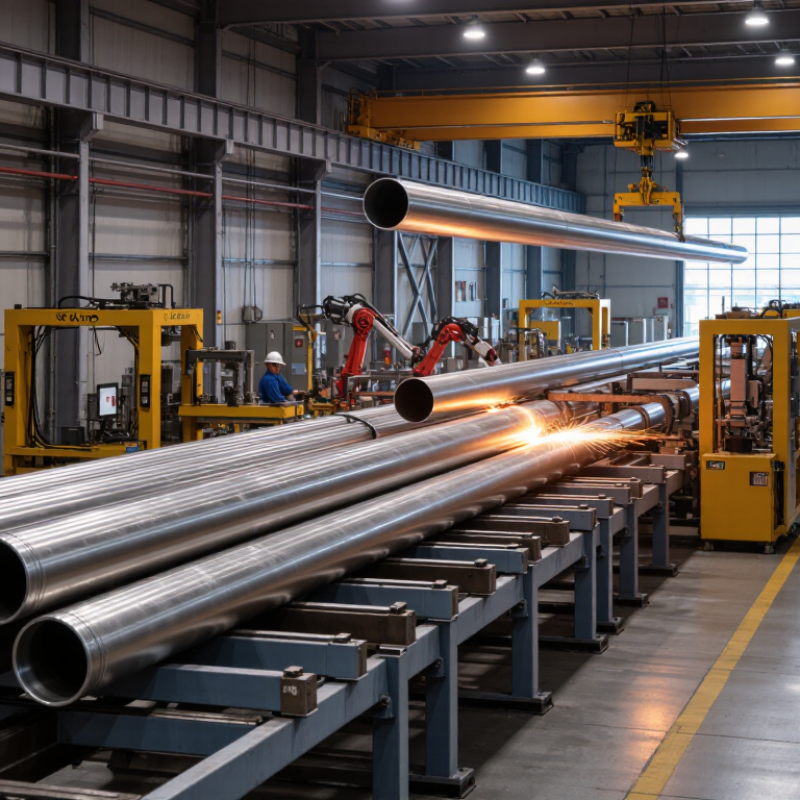
What Defines a Top Stainless Steel Pipe Manufacturer?
A top stainless steel pipe manufacturer is defined by evidence, not polished promises. In practice, quality begins with controlled raw material selection and complete heat traceability. Each coil, billet, or plate should connect to inspection records. This matters when a pipe later enters a corrosive plant or high-temperature line. Experienced manufacturers understand that grade alone does not guarantee performance. Surface finish, welding method, heat treatment, and dimensional control also affect service life. Small details matter.
Reliable production follows documented procedures that operators can repeat across batches. Skilled teams monitor weld penetration, wall thickness, ovality, and surface defects during manufacturing. Independent testing can verify chemical composition, tensile strength, hardness, and corrosion resistance where required. A trustworthy supplier explains the applicable standard and provides clear mill certificates. It should also preserve sample records and respond quickly when a customer questions a result. This is where technical experience becomes visible. Not in slogans.
A strong manufacturer does not hide practical limits. It states when a grade, finish, or diameter may require longer lead times. It discusses tolerances before production, not after rejection. Site experience also helps: careful packing and end protection can prevent damage before installation. Yet no factory is flawless. Occasional variation can occur, and honest corrective action matters more than pretending otherwise. Buyers should examine audit records, test reports, production capacity, and after-sales communication before choosing a manufacturing partner.
How Stainless Steel Pipe Manufacturers Are Classified by Product Range
Stainless steel pipe manufacturers are often classified by the breadth of their product ranges. Some focus on a narrow selection of standard sizes and grades. Others supply seamless and welded pipe, with options for different wall thicknesses, diameters, and finishes. A broad catalog can help buyers match pipe to a project. Bigger is not automatically better.
Product range also includes material grades and fabrication details. A manufacturer may offer austenitic, ferritic, or duplex stainless steels, each suited to different conditions. Welded pipe is commonly made from formed strip, while seamless pipe is produced without a longitudinal weld. That distinction matters, but it does not tell the whole story. Heat treatment, dimensional tolerances, and inspection records also affect suitability.
Some suppliers serve general construction, while others tailor their range to food processing, chemical plants, or high-temperature systems. Their catalogs may list cut lengths, polishing, or custom dimensions. Check the available specifications, not just the category names. The categories are useful, but imperfect. A polished pipe, for example, is not automatically appropriate for hygienic service. Buyers should compare technical documents and confirm that the stated grade and dimensions fit the operating conditions. Small catalog details can prevent costly mismatches.
Leading Stainless Steel Pipe Manufacturers by Region and Industry
Regional leadership in stainless steel pipes depends on more than production volume. The World Stainless Association reported 58.4 million tonnes of global crude stainless steel production in 2023. Asia supplied most of this output, supported by dense mills, broad fabrication networks, and strong demand from construction and process industries. European manufacturers remain influential in engineered piping, especially where certification, traceability, and corrosion performance matter. North American producers often compete through domestic supply, shorter delivery routes, and project-specific fabrication.
Industry requirements change the meaning of “top.” Chemical plants need stable wall thickness and resistance to aggressive media. Food and pharmaceutical facilities demand smooth internal surfaces, hygienic welding, and documented cleaning procedures. Energy projects may prioritize high-temperature strength, non-destructive testing, and long-term reliability. The International Energy Agency expects global energy investment to remain above 3 trillion dollars in 2024, supporting continued demand for durable process piping. Yet demand forecasts are not purchase specifications.
A reliable manufacturer should provide heat numbers, test certificates, dimensional reports, and welding qualifications. ASTM, EN, and ISO compliance should be checked against the project’s actual service conditions. I would also inspect rejection rates and delivery performance, not only catalog claims. That detail is often overlooked. Regional rankings can mislead when they count raw output instead of qualified pipe capacity. The better comparison considers alloy control, forming accuracy, inspection depth, and field experience across the target industry.
Who Are the Top Stainless Steel Pipe Manufacturers? — Leading Stainless Steel Pipe Manufacturers by Region and Industry
Regional industry overview, not a ranked list of companies. Capabilities and product ranges vary by manufacturer; the grades, standards, and applications below are representative examples.
| Region | Representative Manufacturing Markets | Common Pipe Products and Grades | Relevant Standards | Industries and Typical Applications |
|---|---|---|---|---|
| East Asia | China, Japan, and South Korea have established stainless steel production and processing industries. | Welded and seamless pipe; common austenitic grades include 304/304L and 316/316L. Product availability depends on the producer and specification. | ASTM A312/A312M; JIS G 3459; ASME B36.19M for stainless steel pipe dimensions where specified. | Chemical processing, food and beverage equipment, water systems, construction, and general industrial service. |
| Europe | Manufacturing and processing activity is found across several European countries, including Italy, Germany, and Sweden. | Welded and seamless stainless steel tubes and pipes; austenitic grades such as 304L and 316L are widely used, with duplex grades available for selected applications. | EN 10216-5 for seamless stainless steel tubes for pressure purposes; EN 10217-7 for welded stainless steel tubes for pressure purposes. | Process equipment, energy, pharmaceuticals, food production, building services, and transport infrastructure. |
| North America | The United States, Canada, and Mexico serve industrial, energy, infrastructure, and process-equipment markets. | Welded and seamless pipe, including austenitic grades; some producers also offer corrosion-resistant or duplex products to project specifications. | ASTM A312/A312M for austenitic stainless steel pipe; ASTM A358/A358M for electric-fusion-welded austenitic alloy steel pipe; ASME B36.19M for dimensions. | Oil and gas, chemical and petrochemical processing, power generation, pulp and paper, and water infrastructure. |
| South Asia | India is a significant regional source of stainless steel products and serves both domestic and export markets. | Welded and seamless pipe in commonly specified austenitic grades such as 304/304L and 316/316L; specialty grades are available from some suppliers. | ASTM A312/A312M; applicable project specifications may also reference ASME B36.19M for dimensions. | Construction, water and wastewater, food processing, chemical plants, pharmaceuticals, and industrial fabrication. |
| Global, project-specific supply | International projects may source pipe from multiple regions, subject to qualification, inspection, and delivery requirements. | Selection may include austenitic stainless steels or duplex stainless steels such as grade 2205 when the service conditions require them. | Applicable ASTM or EN product standards, together with the project’s dimensional, testing, and inspection requirements. | Offshore and marine service, desalination, chemical processing, and other applications where corrosion resistance and design conditions guide material selection. |
Key Standards, Certifications, and Production Capabilities to Compare
Selecting a top stainless steel pipe manufacturer requires more than checking production volume. The International Stainless Steel Forum reported approximately 58.4 million tonnes of global stainless steel production in 2023. That scale increases the value of traceability, testing, and process control.
Check whether the manufacturer produces to ASTM A312, ASTM A269, or equivalent EN specifications. For process piping, ASME B36.19M dimensional compliance matters. ISO 9001 certification supports documented quality systems, but it does not guarantee perfect pipe. Verify the certificate’s scope and issuing body. Request EN 10204 3.1 material certificates, heat numbers, chemical analysis, and mechanical test results. Small details matter.
Production capability should match the application. Review melting access, hot piercing, cold drawing, heat treatment, and surface finishing. Ask whether each batch receives hydrostatic testing, ultrasonic testing, eddy-current testing, and positive material identification. The World Steel Association reported 1.89 billion tonnes of crude steel production in 2023, yet capacity alone says little about stainless pipe consistency. A supplier may own modern equipment but lack stable calibration practices. That is easy to overlook.
Audit sample records, not just brochures. Compare wall-thickness tolerances, straightness data, rejection rates, and delivery performance across several lots. Some manufacturers disclose impressive machinery but limited evidence. That gap deserves careful questioning. Also confirm whether welding procedures, operator qualifications, and non-destructive testing personnel follow recognized requirements. A technically strong supplier should explain deviations clearly, even when the answer is inconvenient.
How to Evaluate and Select the Right Stainless Steel Pipe Manufacturer
Who Are the Top Stainless Steel Pipe Manufacturers?
How to Evaluate and Select the Right Stainless Steel Pipe Manufacturer
“Top” should mean consistent performance for your application, not simply large production capacity. The World Stainless Association reported 58.4 million metric tonnes of global stainless-steel melt-shop production in 2023, a 4.6% increase from 2022. This figure describes the wider supply base, not pipe quality. Ask manufacturers how they control grade chemistry, wall thickness, weld integrity, and traceability. For pressure-service pipe, check whether products meet the applicable ASTM A312/A312M requirements. Request sample material test certificates, inspection records, and clear explanations of testing methods.
Compare actual evidence. Verify that heat numbers on certificates match the pipe markings. Review dimensional inspection results, corrosion-testing procedures, and the process for handling nonconforming products. Ask about production capacity and typical lead times, then confirm both against your order schedule. A polished certificate alone is not proof; independent inspection or a facility audit can reveal gaps. Even a careful checklist may miss a process issue, so keep qualification requirements specific.
Tips: Send the same written specification to each candidate. Compare certificates, test results, tolerances, and delivery commitments line by line. Check a sample shipment, too. Small inconsistencies matter.


